

Read bio
No down payment car insurance sounds like the cheapest way to get covered fast, especially when money is tight. But many drivers quickly discover that avoiding a large upfront payment does not always mean paying less overall.
In many cases, the true cost of no down payment coverage shows up later through higher monthly installments, extra fees, and less flexible billing options. If you are trying to save money, it is important to look beyond the first payment and understand what the policy really costs over time.
Why the First Payment Can Be Misleading
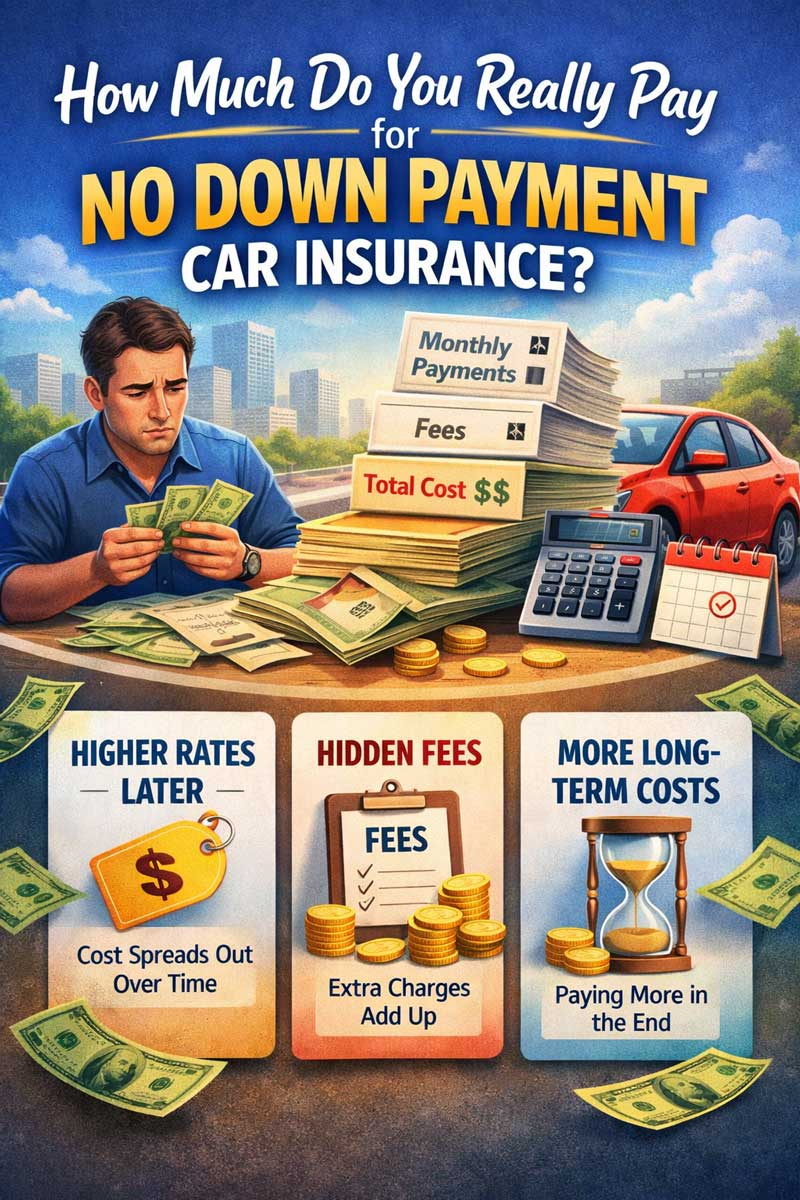
Many drivers focus only on the upfront cost when comparing quotes. That makes sense if you need coverage immediately and do not have a lot of cash available. However, the first payment only tells part of the story. A policy with little or no money due at the start may simply shift more of the cost into future monthly payments.
That is why a quote that looks affordable on day one can end up costing more over the full policy term. To understand how these plans work in practice, it helps to look at real no down payment car insurance options and compare them with the total amount you would pay over six or twelve months.
Quick Reality Check
A low upfront payment can help you get insured faster, but it does not automatically mean the policy is cheaper. In many cases, you are simply paying later instead of paying less.
What You Are Actually Paying For
When an insurer gives you a quote, the total premium is usually based on your level of risk. That includes factors like your age, location, driving record, vehicle, coverage limits, and sometimes your insurance history. Once that premium is calculated, the company decides how to split it into payments.
With a no down payment policy, the insurer may reduce the amount due at the beginning, but that usually means one or more of the following:
- Higher monthly installments
- More fees added to each payment
- Less room to lower the total cost later
- Stricter terms if you miss a payment
That does not make the product bad. It simply means you have to understand the full price before deciding it is the best deal.
Example: No Down Payment vs. Lower Total Cost
| Cost Factor | No Down Payment Plan | Lower Deposit Plan |
|---|---|---|
| Upfront Payment | $0 | $75 |
| Monthly Payment | Higher | Lower |
| Installment Fees | Often more frequent | Often lower overall |
| Total Policy Cost | Usually higher | Often lower |
This is why many drivers who start with no down payment coverage eventually realize that the lowest initial bill is not always the best long-term option.
The Hidden Fees That Raise the Real Price
One of the biggest reasons no down payment insurance can cost more is that extra charges are not always obvious in the first quote. Some companies spread fees out across the policy term, which makes the first payment look attractive while increasing the overall amount you pay.
Small charges added every month can quietly raise the total cost.
Some insurers add administrative costs that are easy to miss during checkout.
Drivers with lapses or prior issues may get more expensive payment structures.
If you want a clearer view of how these expenses add up, it is worth reviewing a full no down payment car insurance total cost breakdown before choosing a plan.
Who Usually Pays More?
Not every driver will see the same pricing structure. The people who often pay the most for no down payment coverage include drivers with recent lapses in insurance, tickets, accidents, poor credit-based insurance scores where allowed, or very limited coverage history. In those cases, the insurer sees more risk and may offer less flexible billing terms.
That is why two people with similar cars can get very different monthly costs. One driver may qualify for a balanced payment plan, while another may be pushed into a more expensive setup just to avoid paying upfront.
How to Lower the Real Cost
If you need no down payment insurance, there are still ways to avoid overpaying. The key is to compare more than just the first bill.
- Compare the full premium, not just the amount due today
- Ask whether installment fees apply every month
- Check if a small upfront payment lowers the total price significantly
- Review optional add-ons and remove the ones you do not need
- Re-shop your policy before renewal instead of letting it auto-renew
Even a small deposit can sometimes reduce the full policy cost enough to make it the smarter financial move.
When Paying More Upfront Can Save You Money
This is the part many drivers overlook. If paying a little upfront lowers your monthly payment and cuts recurring fees, then the total policy cost may end up noticeably lower. That means the “cheapest” option at the start can be more expensive by the end of the term.
For drivers who can afford even a modest deposit, comparing that alternative is often worth it. The goal is not just getting covered today. The goal is getting covered in a way that stays affordable over time.
Final Thoughts
No down payment car insurance can be a useful solution when you need coverage immediately and cannot handle a large upfront bill. But the real price of that convenience is often higher monthly payments and a higher total cost over time.
If you want to save money, compare the full cost of the policy—not just the first payment. That is the only way to know what you really pay.
Frequently Asked Questions
Is no down payment car insurance cheaper overall?
Usually not. It may reduce the upfront amount due, but many drivers end up paying more over time through higher monthly payments and added fees.
Why do monthly payments go up with no down payment coverage?
Because the insurer still has to collect the full premium. If less is paid at the beginning, more of the cost is spread into later payments.
What should I compare before choosing a no down payment plan?
Compare the total premium, monthly installments, fees, billing structure, and whether a small upfront payment would lower the full cost of the policy.